

AKC Breed Selector Tool
Answer a few questions about your lifestyle to find your ideal dog breed. Covers activity level, living space, allergies, and experience level.
Start QuizIdentify your dog's breed using our AI-powered photo tool or trait-based identifier. Compare AI results with DNA testing for the most accurate breed profile.
Add the item, symptom, or label term you want to review in Dog Breed Identifier, along with any timing or context you know. The result helps you organize the next question more clearly.
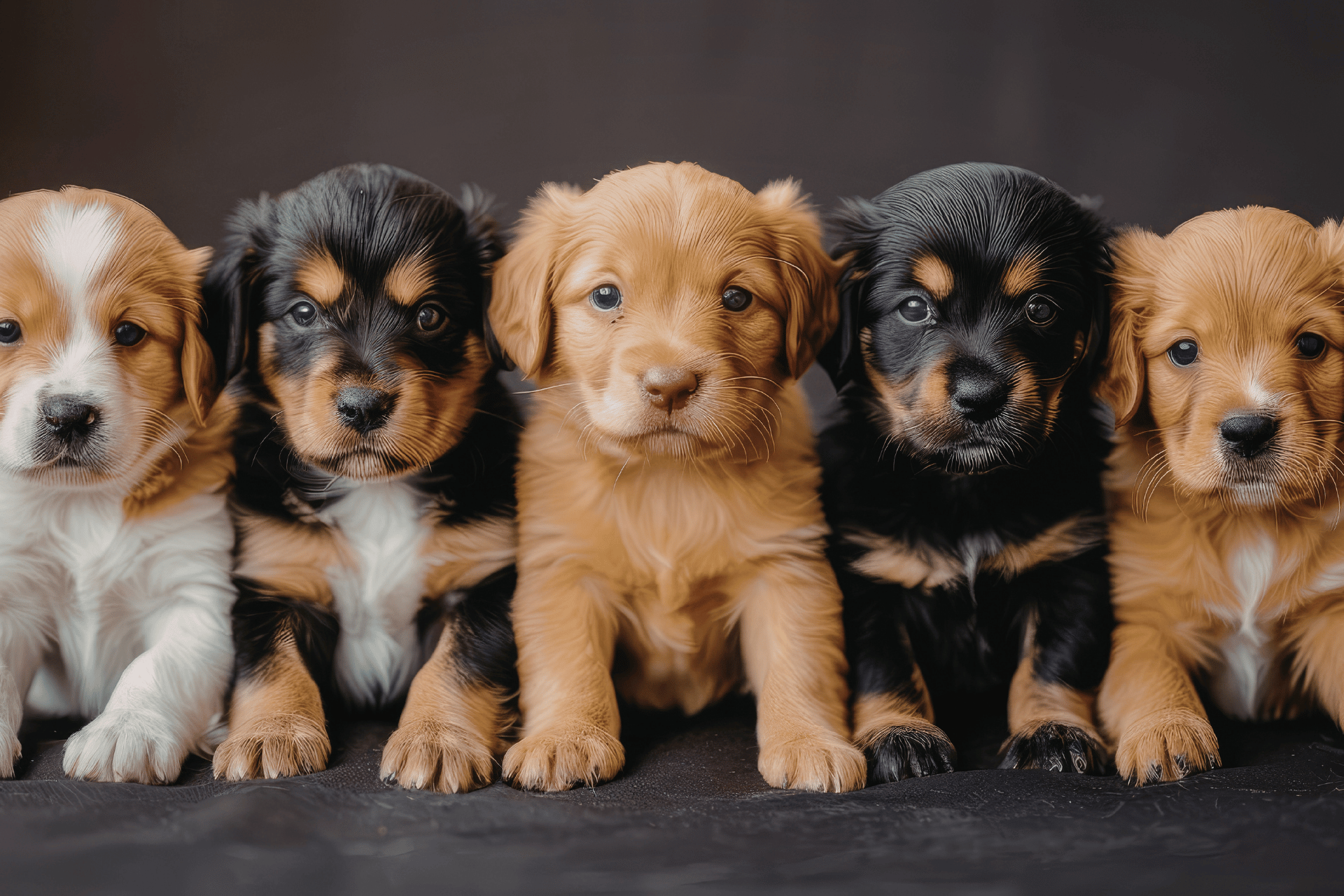
Identifying the breed or breed mix of your dog is both a fascinating pursuit and a practically useful piece of information for understanding your dog's behavioral tendencies, health risks, exercise needs, and grooming requirements. The Dog Breed Identifier uses physical trait inputs, visual characteristics, and behavioral tendencies to suggest likely breed components, and explains how AI-powered identification and DNA testing complement each other for the most accurate breed assessment.
Physical traits including coat type, color, body structure, ear shape, tail carriage, and facial proportions are compared against breed standards to suggest likely breed components. This method works best for dogs that strongly resemble a specific breed or breed group.
Machine learning models trained on millions of labeled dog images can identify breed components from photos with high accuracy for visually distinctive breeds. AI identification is less reliable for mixed-breed dogs where traits blend unpredictably, but provides a useful first assessment.
Consumer dog DNA tests analyze hundreds of thousands of genetic markers and compare them to breed reference databases. Leading tests (Embark, Wisdom Panel) can identify breed percentages down to 5% and screen for hundreds of genetic health conditions simultaneously.
| Method | Accuracy | Cost | Best For | Limitations |
|---|---|---|---|---|
| Trait-based tool | Moderate for purebreds; low for complex mixes | Free | Quick initial assessment | Cannot identify genetic ancestry accurately in mixes |
| AI photo identification | Good for visually distinctive breeds/mixes | Free-low cost | Quick visual assessment | Visual traits are influenced by epigenetics, not just genes |
| Embark DNA test | 95%+ for breed percentages | ~$100-200 | Definitive breed identification + health screening | Requires sample collection and 2-4 week wait |
| Wisdom Panel Elite | High accuracy; largest breed database (350+ breeds) | ~$150-200 | Comprehensive breed + 150+ health conditions | Similar to Embark; pricing competitive |
| Veterinary breed DNA test | Laboratory accuracy | $100-300 | Veterinary confirmation | Same technology as consumer tests |
Use the table below to compare Physical Trait Reference Guide.
| Trait | Indicator | Likely Breed Groups |
|---|---|---|
| Wiry/harsh coat | Double coat with harsh outer layer | Terriers, Wirehaired Dachshund |
| Smooth short coat | Minimal shedding pattern; tight coat | Boxers, Bulldogs, Vizsla, Weimaraner |
| Dense undercoat with shedding | Heavy seasonal shedding | Retrievers, Huskies, German Shepherd, Malamute |
| Curly or wavy coat | Non-shedding or low-shedding curl | Poodle-mixes, Portuguese Water Dog, Lagotto |
| Feathering on legs/ears | Long silky feathering | Spaniels, Setters, Collies |
| Pricked (upright) ears | Natural pricked ears | Huskies, German Shepherd, Malinois, Chihuahua |
| Drop ears (pendant) | Long hanging ears | Basset Hound, Cocker Spaniel, Bloodhound |
| Rose ears | Folded back | Greyhound, Whippet, Bulldog |
| Blue/merle coloration | Merle gene present | Australian Shepherd, Border Collie, Great Dane, Dachshund |
| Brachycephalic face | Flat face | Bulldog, Pug, Boston Terrier, Shih Tzu, Boxer |
Use the table below to compare Why Breed Matters for Health.
| Breed or Group | Key Health Risks to Screen For |
|---|---|
| Labrador Retriever | Hip dysplasia, elbow dysplasia, obesity, EIC (exercise-induced collapse), PRA |
| German Shepherd | Hip/elbow dysplasia, degenerative myelopathy, exocrine pancreatic insufficiency |
| French Bulldog | Brachycephalic obstructive airway syndrome, spinal disease (IVDD), skin fold infections |
| Golden Retriever | Cancer (among highest prevalence of any breed), hip dysplasia, skin disease |
| Dachshund | IVDD (spinal disc disease), obesity-driven spinal stress |
| Boxer | Cancer (mast cell tumors, lymphoma), heart disease (aortic stenosis, cardiomyopathy) |
| Cavalier King Charles Spaniel | Mitral valve disease (affects nearly all by age 10), syringomyelia/CM |
| Bernese Mountain Dog | Cancer (highest breed prevalence), histiocytic sarcoma, hip/elbow dysplasia |
Yes. Dogs in shelters and rescue organizations often have complex multigenerational mixing. A dog can genuinely be a mix of 10-15 different breeds at small percentages. The DNA result reflects real genetic ancestry, even when the percentages are small.
Not necessary, but valuable. The health screening component of premium DNA tests (Embark screens for 200+ genetic conditions) can flag diseases your dog carries before symptoms develop. For planning preventive care, knowing your dog is a carrier for DM (degenerative myelopathy) or at elevated PRA risk is genuinely useful medical information.
Note: Breed identification from appearance or traits is an estimate, especially for mixed-breed dogs.
Continue with AKC Breed Selector Tool, Dog Personality Questionnaire (DPQ), Pet Compatibility Checker for the next practical step.
Answer a few questions about your lifestyle to find your ideal dog breed. Covers activity level, living space, allergies, and experience level.
Start Quiz
Take the Dog Personality Questionnaire to learn your dog's unique traits. Based on validated canine behavioral research for accurate, meaningful results.
Start Assessment
Find your ideal pet match based on lifestyle, home, and experience level. Our compatibility quiz helps you choose between dogs, cats, and more.
Start Check