
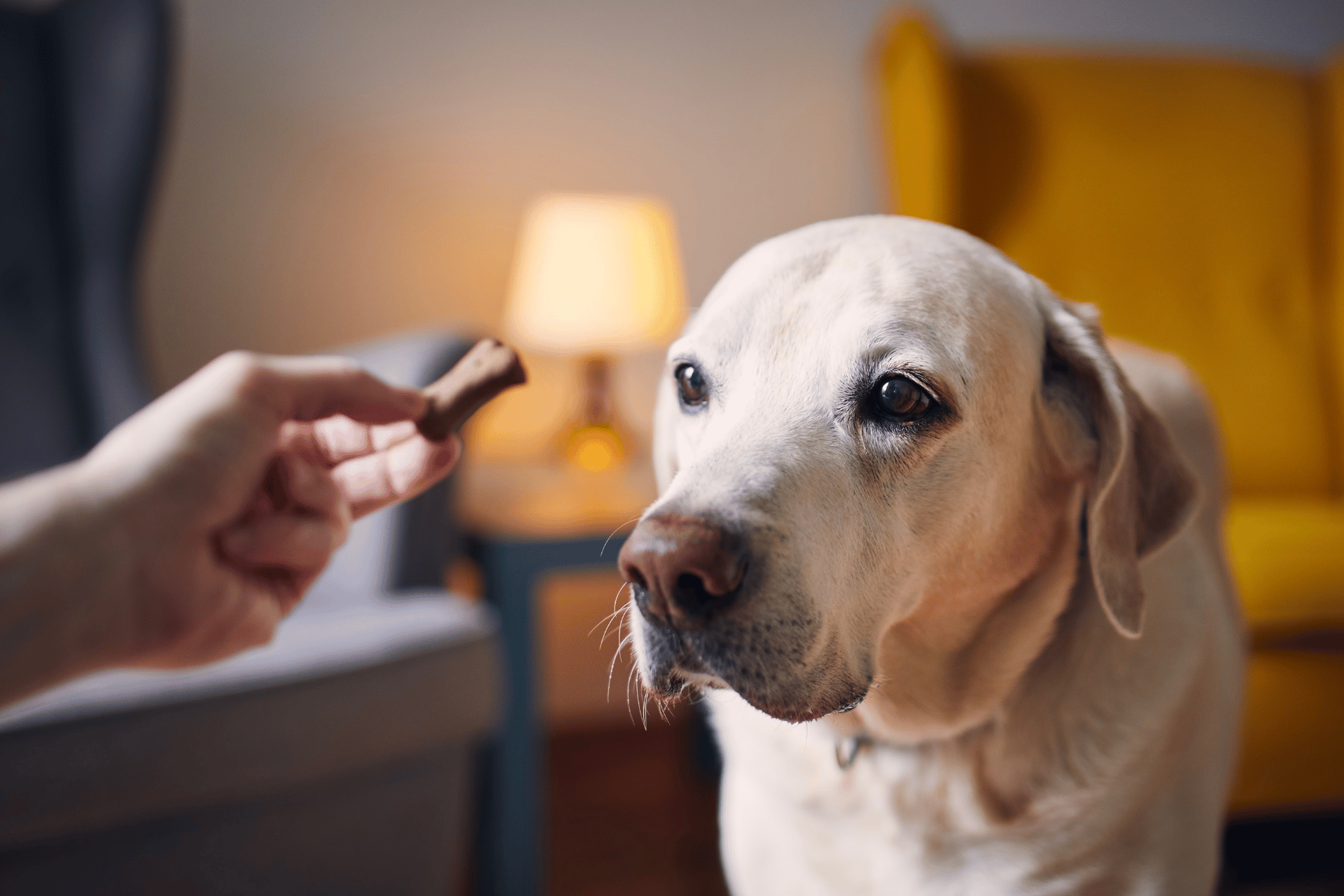
C-BARQ: Canine Behavioral Assessment & Research Questionnaire
Complete the C-BARQ questionnaire to assess your dog's behavior across 14 traits. Get a detailed profile to guide training and understand aggression or fear.
Start AssessmentTake the Dog Personality Questionnaire to learn your dog's unique traits. Based on validated canine behavioral research for accurate, meaningful results.
Answer the questions in Dog Personality Questionnaire (DPQ) using recent observations. Review the score as a practical summary, then compare it with changes you have noticed at home.

The Dog Personality Questionnaire (DPQ) is a standardized, owner-completed behavioral assessment tool developed to measure five core personality dimensions in domestic dogs, analogous to the 'Big Five' personality dimensions in human psychology. Originally developed and validated by Samuel Gosling and colleagues, the DPQ has been used in dozens of research studies and provides a structured, quantifiable way to describe your dog's personality. Understanding these dimensions helps owners select appropriate training methods, predict behavior in novel situations, make informed care decisions, and develop a deeper appreciation for their individual dog's unique character.
Use the table below to compare The Five DPQ Personality Dimensions.
| Dimension | Definition | High Score Behavior | Low Score Behavior | Training Implication |
|---|---|---|---|---|
| Playfulness vs. Seriousness | Level of exuberance and desire for play | Initiates play frequently; high energy in social situations | Calm, reserved; prefers quiet interaction | High: needs play in training; Low: may prefer task-based work |
| Curiosity/Fearlessness vs. Cautiousness | Approach vs. avoidance of novel stimuli | Explores new things eagerly; does not startle easily | Wary of new things; cautious approach; startles easily | High: adventurous training fine; Low: use slow, graduated exposure |
| Chase-Proneness | Tendency to chase moving stimuli | High prey drive; reactive to movement | Low prey drive; ignores movement | High: strong toy/prey motivation in training; Low: use food rewards |
| Sociability vs. Independence | Desire for social interaction with people | Seeks proximity to humans; high engagement | Independent; less focused on human attention | High: strong social reward; Low: use primary rewards (food/toys) |
| Aggressiveness vs. Submissiveness | Tendency toward dominant or aggressive behavior | Assertive; tests boundaries; may show resource guarding | Deferential; avoids conflict; easily yielding | High: positive training only; Low: more compliant to most methods |
Each dimension is scored by rating a series of adjective pairs on a 7-point scale (for example: 1=extremely playful, 7=extremely serious). The dimension score is the average of all relevant items. Scores toward 1 or 7 represent the extreme ends of each dimension; scores near 4 represent the midpoint.
Use the table below to compare DPQ Profiles and Breed Tendencies.
| Breed Group | Typical DPQ Profile | Notes |
|---|---|---|
| Herding breeds (Border Collie, Aussie) | High playfulness, High curiosity, High chase-proneness, High sociability | Intense, active, highly trainable; can develop obsessive tendencies |
| Sporting breeds (Labrador, Golden Retriever) | High playfulness, High curiosity, Moderate-high chase, High sociability | Exceptionally trainable; people-focused; enthusiastic but forgiving |
| Terriers | High playfulness, High curiosity, Very high chase-proneness, Moderate sociability | Independent streak; determined; needs confident handling |
| Hound breeds | Moderate playfulness, Moderate curiosity, Very high chase (sighthounds), Moderate sociability | Scent-driven; can be selectively deaf on a leash; chase instinct strong |
| Toy breeds | High playfulness, Moderate curiosity, Low chase, High sociability (most) | Variable; often high social motivation; smaller breeds can be high in aggressiveness dimension |
| Guardian/Working breeds | Low playfulness, Moderate curiosity, Moderate chase, Lower sociability | Serious, self-sufficient; bond deeply with known family |
The DPQ is most useful for training when it identifies a dog's primary motivational profile. A dog scoring high in Sociability responds strongly to praise and social reward. A dog scoring high in Chase-Proneness is highly motivated by prey-type toys. A dog scoring high in Curiosity/Fearlessness is likely suited to adventure sports and novel environment exposure.
No. The DPQ and C-BARQ measure different constructs. The C-BARQ measures behavioral problems and reactions (fear, aggression, trainability, excitability), while the DPQ measures personality traits (playfulness, curiosity, chase, sociability, aggressiveness). Both provide complementary information and can be used together for a comprehensive behavioral profile.
Yes, somewhat. Playfulness and chase-proneness tend to decrease with age as dogs mature, while aggressiveness dimension scores often stabilize after adolescence. Significant personality changes in a previously well-characterized adult dog can indicate a medical issue, particularly pain, cognitive dysfunction, or hormonal change.
Note: Personality results describe current patterns and can change with age, training, health, and environment.
Continue with C-BARQ: Canine Behavioral Assessment & Research Questionnaire, Canine Stress Calculator, Dog Dementia Tool for the next practical step.
Complete the C-BARQ questionnaire to assess your dog's behavior across 14 traits. Get a detailed profile to guide training and understand aggression or fear.
Start Assessment
Score your dog's stress level using behavioral and physical signs. Understand what triggers canine anxiety and learn how to help your dog feel calmer.
Start Assessment
Use this vet-approved questionnaire to screen your dog for signs of canine cognitive dysfunction (dog dementia). Get a score and know when to act.
Start Assessment