
Dog Heat Cycle Calculator
Track your dog's heat cycle and find the optimal breeding window. Enter the start date to map all four estrus stages and plan accordingly.
Open PlannerCalculate your dog's due date and get a week-by-week pregnancy timeline. Enter the breeding date to plan for whelping and puppy care.
Enter the most reliable starting date you have in Canine Pregnancy Calculator and Calendar. The result gives you an estimated timeline that can help with reminders, preparation, and follow-up.
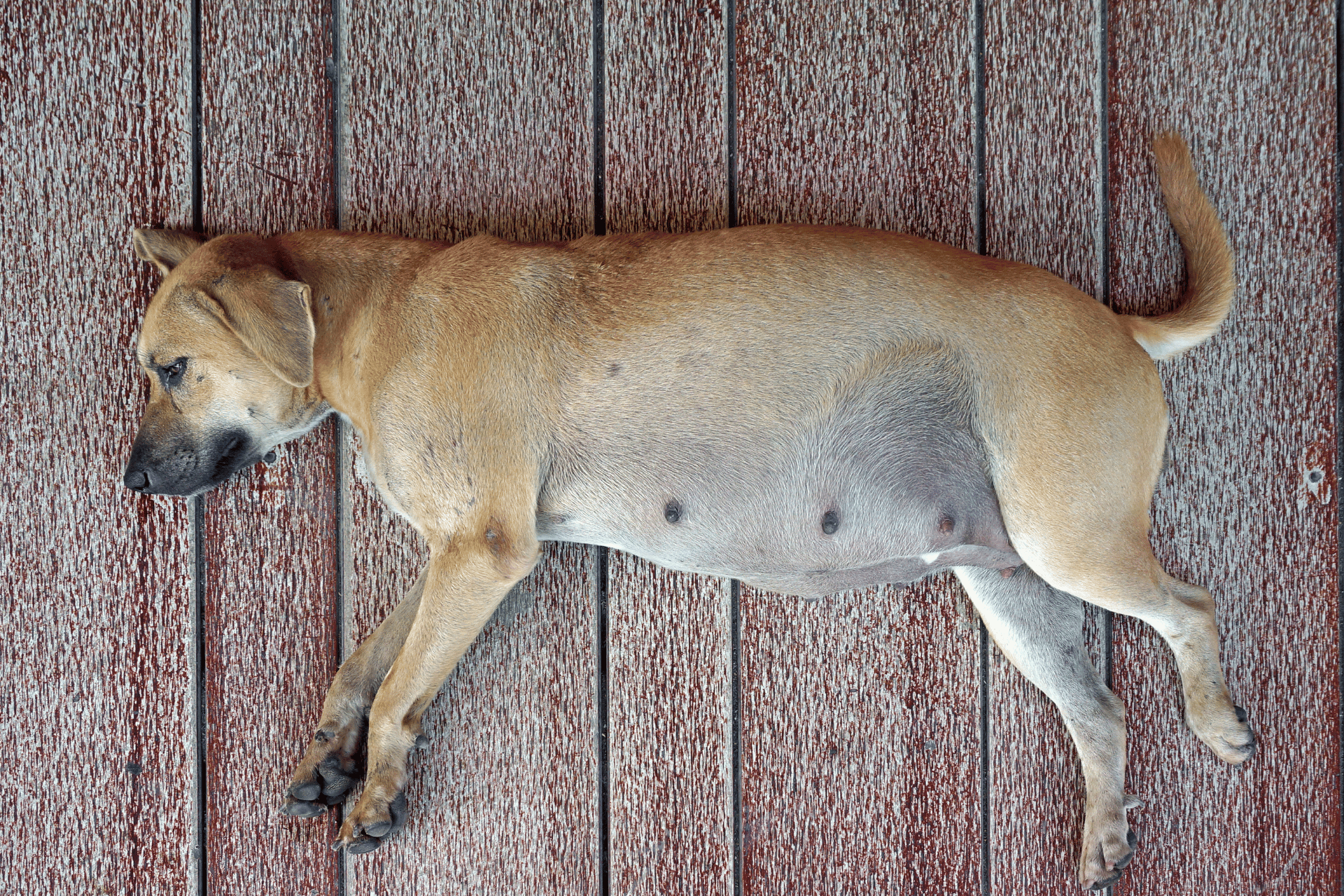
A dog's pregnancy lasts approximately 63 days from ovulation - though observed whelping dates can range from 57 to 70 days from the last mating depending on the timing of ovulation within the breeding window. The Canine Pregnancy Calculator and Calendar takes the breeding or ovulation date as its input and generates a complete timeline: key developmental milestones, preparation checkpoints, expected whelping date, and postpartum care reminders. This tool is equally valuable for planned breedings and for owners who suspect an unplanned pregnancy.
Accurate pregnancy tracking helps you time veterinary examinations correctly, prepare the whelping environment at the right moment, recognize warning signs early, and give mother and puppies the best possible start.
Use the table below to compare How Long Are Dogs Pregnant?.
| Dating Method | Gestation Length | Notes |
|---|---|---|
| From ovulation (LH surge) | 64-66 days | Most accurate - requires progesterone testing |
| From first mating | 57-72 days | Wide range because ovulation timing varies |
| From last mating | 57-70 days | Still variable but more useful if only one mating |
| From vaginal cytology (diestrus onset) | 56-58 days | Accurate when cytology is done by vet |
The calculator defaults to 63 days from ovulation or 65 days from the average of first and last mating dates, which is the standard veterinary estimate.
Use the table below to compare Week-by-Week Canine Pregnancy Timeline.
| Week | Days | Development Milestones | Owner Actions |
|---|---|---|---|
| Week 1 | Days 1-7 | Fertilization and early cell division; embryos travel to uterine horns | Continue normal diet; no changes needed |
| Week 2 | Days 8-14 | Embryos implant in uterine wall | No visible signs; avoid unnecessary stress |
| Week 3 | Days 15-21 | Organogenesis begins; embryos are approx. 1 cm; heartbeats detectable by day 22 | First vet exam possible; no X-ray yet; ultrasound viable by day 21-25 |
| Week 4 | Days 22-28 | Puppies' spinal cords, eyes, and facial features form; morning sickness may occur in dam | Ultrasound confirmation; increase food by 10%; flea/tick prevention review |
| Week 5 | Days 29-35 | Puppies now have recognizable dog features; sex determination complete; rapid weight gain | Switch to puppy food or increase meal frequency; note belly growth |
| Week 6 | Days 36-42 | Eyelids, claws, and skin markings develop; dam's belly noticeably enlarged | Increase food by 25-50% above baseline; prepare whelping box location |
| Week 7 | Days 43-49 | Puppies are fully formed; begin crowding uterus; dam may show nesting behavior | Set up whelping box; take baseline rectal temperature twice daily |
| Week 8 | Days 50-56 | Puppies gain weight rapidly; coat develops; may feel movement by palpation | Whelping box ready with clean bedding; gather whelping supplies; vet X-ray to count puppies |
| Week 9 | Days 57-65 | Puppies fully ready for birth; dam's temperature drops below 99F (37.2C) within 24 hours of labor | Monitor temperature every 8-12 hours; stay close; know emergency vet number |
One of the most reliable signs that whelping is imminent within 24 hours is a drop in rectal temperature below 99 degrees Fahrenheit (37.2 C). Normal canine rectal temperature ranges from 100 to 102.5 F (37.8 to 39.2 C). Begin taking temperature twice daily from day 56-58. When you record a reading below 99 F, expect whelping to begin within 24 hours.
Note: Not all dogs show a measurable temperature drop. If your dam does not drop in temperature but is at or past day 63 from ovulation, contact your vet.
Use the table below to compare Signs of Labor.
| Stage | Signs | Duration | Action |
|---|---|---|---|
| Stage 1 (early labor) | Restlessness, panting, nesting, refusal of food, shivering, seeking seclusion | 6-24 hours | Offer water; keep quiet and comfortable; monitor closely |
| Stage 2 (active delivery) | Visible straining; puppy delivered within 30 min of active contractions; followed by placenta | Variable - one puppy every 30-90 min typically | Assist if needed; ensure placenta delivered per puppy |
| Stage 3 (placenta delivery) | One placenta per puppy should be expelled | Typically within 15 min per puppy | Count placentas to match puppy count; call vet if one not expelled within 2 hours |
The first 72 hours are critical. Puppies are born unable to regulate their own temperature (poikilothermic) and entirely dependent on nursing for colostrum intake. Each puppy should: receive colostrum within the first 12-24 hours (contains maternal antibodies), weigh within 5% of birth weight on day 1, gain weight every day (5-10% per day in the first week is normal), and nurse approximately every 2 hours initially.
Early pregnancy is nearly impossible to confirm at home. Signs like nipple enlargement appear by week 3-4, and abdominal enlargement is visible by week 5-6. Behavioral changes like increased affection or nesting can also appear. However, ultrasound by week 3-4 or an X-ray after day 45 are the only reliable confirmation methods.
Yes. Spaying (ovariohysterectomy) during pregnancy terminates the pregnancy and is a viable option for owners who do not wish to continue with an unplanned breeding. The timing in pregnancy affects the complexity of the procedure. Consult your vet promptly if this is being considered.
Litter size varies enormously by breed. Small breeds like Chihuahuas typically have 1-4 puppies. Medium breeds average 4-8. Giant breeds like Mastiffs can have 8-14. The most accurate puppy count comes from an X-ray at day 55-57 when skeletons are mineralized and countable.
Yes. Anorexia (refusal of food) in the 12-24 hours before whelping is completely normal and expected. Offer water but do not force food. After delivery, the dam should resume eating and should be fed a highly nutritious, calorie-dense diet to support milk production.
Puppies should have their first veterinary exam between 4 and 7 days of age to check for congenital abnormalities, cleft palates, umbilical hernias, and to confirm healthy weight gain. Deworming typically begins at 2 weeks of age.
Note: Pregnancy dates are estimates. A veterinarian can confirm pregnancy progress and help plan safe care for the mother and puppies.
Continue with Dog Heat Cycle Calculator, Matchmaker for Breeders, Dog Vaccination Schedule Calculator for the next practical step.
Track your dog's heat cycle and find the optimal breeding window. Enter the start date to map all four estrus stages and plan accordingly.
Open Planner
Check genetic health compatibility between two dogs before breeding. Assess health test results and reduce the risk of heritable conditions in puppies.
Start Check
Predict how big your puppy will get based on current weight, age, and breed size. Includes growth rate charts for small, medium, large, and giant breeds.
Use Calculator