
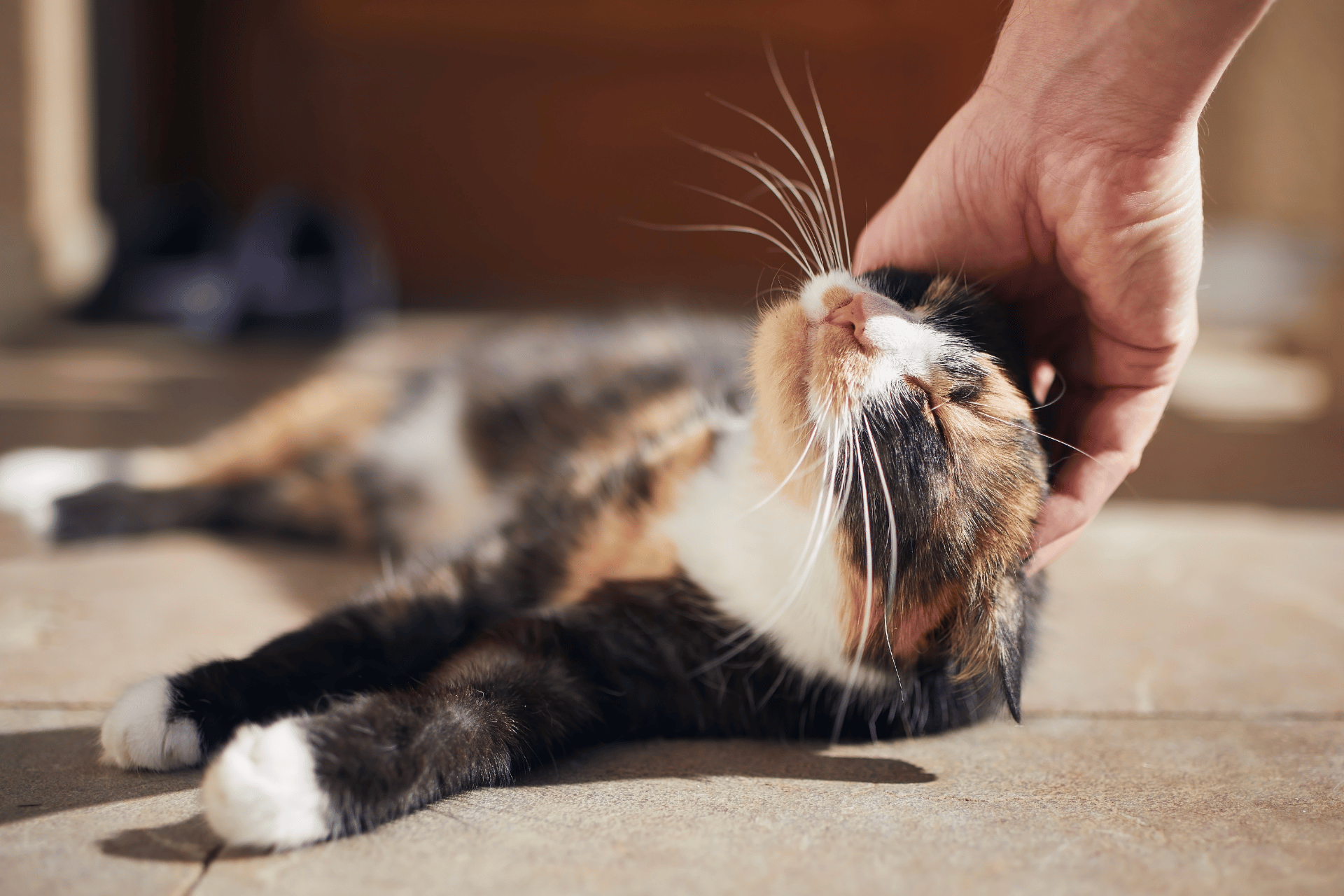
Free 2 Minute Cat Personality Test
Find out your cat's personality type with our free 5-factor feline personality test. Understand their behavior and match enrichment to their unique traits.
Start QuizUse the Fe-BARQ questionnaire to assess your cat's behavior across key dimensions. Understand aggression, fearfulness, and social traits with a scored profile.
Answer the questions in Fe-BARQ: Feline Behavioral Assessment & Research Questionnaire using recent observations. Review the score as a practical summary, then compare it with changes you have noticed at home.

The Fe-BARQ (Feline Behavioral Assessment and Research Questionnaire) is the feline companion to the well-established C-BARQ developed at the University of Pennsylvania. Designed to standardize behavioral assessment in cats, Fe-BARQ uses owner-completed questionnaires to measure multiple behavioral dimensions including fearfulness, aggression, trainability, excitability, and litter box compliance. It is used in research, shelter assessment, veterinary behavioral consultations, and as a tool for cat owners wanting to understand their cat's behavioral profile objectively.
Use the table below to compare Fe-BARQ Behavioral Dimensions.
| Dimension | What It Measures | High Score | Low Score |
|---|---|---|---|
| Human-directed fear | Fear responses toward unfamiliar people | Hides from guests; avoids handling; crouches at approach | Greets strangers calmly; seeks human contact |
| Cat-directed aggression | Aggression toward other cats | Attacks or threatens other household or unfamiliar cats | Tolerant; compatible with other cats |
| Human-directed aggression | Aggression toward people | Bites or scratches people; resource guards | Gentle; tolerates all handling |
| Predatory behavior | Hunting and prey drive | Active hunter; brings prey; stalk-and-pounce on moving objects | Low prey interest |
| Litter box compliance | Appropriate litter box use | Consistently uses box; buried waste | Inappropriate elimination; box avoidance |
| Separation anxiety indicators | Distress when owner absent | Vocalization, destruction, or elimination when alone | Content when alone |
| Excitability | Arousal in stimulating situations | Hyperactive play; overarousal; escalating to biting in play | Calm even in exciting situations |
| Trainability | Responsiveness to owner cues | Responds to name; comes when called; learns tricks | Ignores owner direction |
Use the table below to compare How Fe-BARQ Differs from C-BARQ.
| Feature | Fe-BARQ (Feline) | C-BARQ (Canine) |
|---|---|---|
| Number of items | Approximately 30 core items | 101 items |
| Litter box dimension | Included - critical for cats | Not applicable |
| Predatory behavior | Prominent dimension | 'Chasing' dimension in C-BARQ |
| Social behavior | Measured against both humans and cats | Measured against humans, dogs, strangers |
| Validation status | Validated; fewer published studies than C-BARQ | Extensively validated; 100+ published studies |
| Availability | Free online at University of Pennsylvania | Free online at vetapps.vet.upenn.edu |
Shelters use Fe-BARQ or modified versions to assess cats for adoption placement, matching behavioral profiles to appropriate homes. A cat with high human-directed fear scores needs a quiet, patient adopter. A cat with high cat-directed aggression needs a single-cat home or a very careful introduction plan.
Use the table below to compare Interpreting Fe-BARQ Results for Home Management.
| High Score On | Behavioral Implication | Management Strategy |
|---|---|---|
| Human-directed fear | Likely under-socialized; anxious with strangers | Slow approach protocols; hiding spaces always available; pheromone diffusers; no forced interactions |
| Cat-directed aggression | Multi-cat household tension; hissing, fighting, blocking | Spatial separation; multiple resources; systematic reintroduction protocol; veterinary behaviorist if severe |
| Human-directed aggression | Bite risk; overstimulation aggression common in play | Learn individual cat's warning signals; stop play before escalation; enrichment to redirect prey drive |
| Litter box non-compliance | House soiling; may indicate medical or behavioral cause | Veterinary exam to rule out medical; assess box number, type, location, cleanliness; pheromone products |
| Separation anxiety | Distress vocalization or destruction when owner absent | Enrichment during absences; food puzzles; Feliway; in severe cases, veterinary behavioral consultation |
Fe-BARQ has good internal validity and has been used in published behavioral research, but it has a smaller evidence base than C-BARQ, which has been used in over 100 published peer-reviewed studies. Fe-BARQ is still a valuable and legitimate assessment tool, especially compared to no standardized behavioral assessment at all.
Fe-BARQ is most reliable when based on stable, established behavior patterns. A newly adopted cat may still be adjusting to their environment, meaning scores in the first few weeks may not represent their settled behavioral baseline. Reassessing at 3-6 months gives more reliable results.
Note: Behaviour results are a snapshot of current patterns and may change with age, health, environment, and routine.
Continue with Free 2 Minute Cat Personality Test, Feline Stress Calculator, Feline Grimace Scale for the next practical step.
Find out your cat's personality type with our free 5-factor feline personality test. Understand their behavior and match enrichment to their unique traits.
Start Quiz
Find out if your cat is stressed using behavioral and physical indicators. Get a stress score and actionable tips to help your cat feel safe and relaxed.
Start Assessment
Assess your cat's pain using the validated Feline Grimace Scale. Score 5 facial action units to detect discomfort and decide on vet care.
Start Assessment