
Fe-BARQ: Feline Behavioral Assessment & Research Questionnaire
Use the Fe-BARQ questionnaire to assess your cat's behavior across key dimensions. Understand aggression, fearfulness, and social traits with a scored profile.
Start AssessmentFind out your cat's personality type with our free 5-factor feline personality test. Understand their behavior and match enrichment to their unique traits.
Answer the questions in Free 2 Minute Cat Personality Test using recent observations. Review the score as a practical summary, then compare it with changes you have noticed at home.
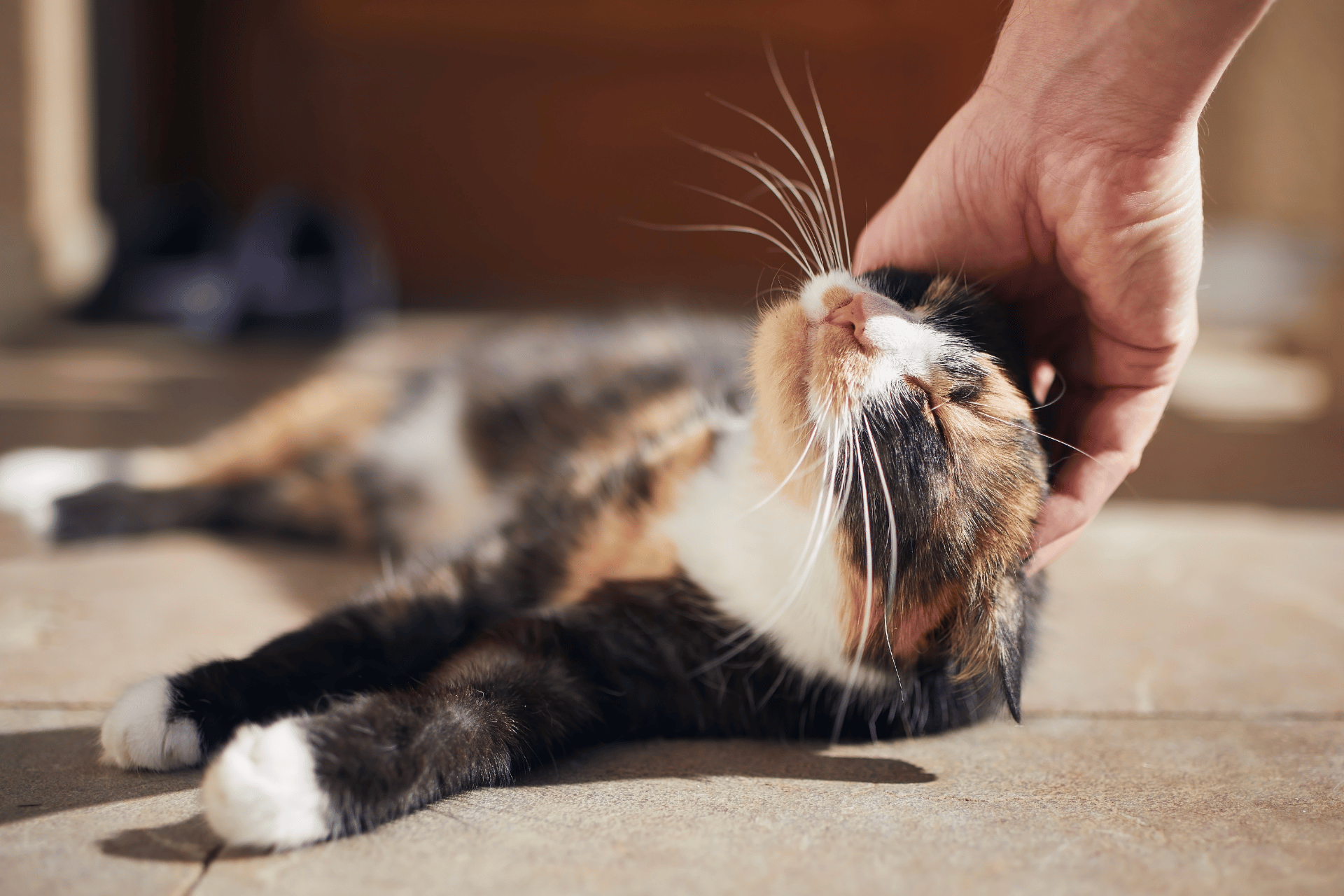
Just like humans, cats have distinct, measurable personalities that influence how they interact with their environment, other animals, and the people in their lives. Understanding your cat's personality type helps you provide enrichment that matches their nature, choose compatible companions, select appropriate veterinary handling approaches, and deepen your relationship with your feline companion. The Free 2 Minute Cat Personality Test is based on the Big Five feline personality model validated in published research, identifying your cat's profile across five key dimensions.
Research by Carver and colleagues (2014) and subsequent work by Litchfield et al. (2017) identified five reliable personality dimensions in domestic cats, known informally as the Feline Five:
| Dimension | High Score | Low Score | Enrichment for High Score | Enrichment for Low Score |
|---|---|---|---|---|
| Neuroticism (fearfulness/anxiety) | Anxious, insecure, fearful of novelty, hides from strangers | Calm, relaxed, confident in new situations | Stable routine; multiple hiding spots; limited forced exposure; Feliway | Normal variety; social exposure fine |
| Extraversion (sociability/playfulness) | Highly social, curious, playful, seeks stimulation | Reserved, self-sufficient, prefers own company | Daily interactive play; cat-to-cat companionship; window perches; puzzle feeders | Respect solitude; do not force socialization; solo enrichment |
| Dominance (assertiveness) | Assertive, bold, territorial, may bully other cats | Submissive, avoids conflict, easily displaced | Multiple resources to prevent resource guarding; challenge in play | Ensure access to resources not blocked; Feliway Multicat if housemates present |
| Impulsiveness (erratic unpredictability) | Unpredictable reactions; sudden behavioral changes | Consistent, steady behavioral responses | Structured routine; predictable interactions; avoid startling | Normal varied interactions fine |
| Agreeableness (affection/gentleness) | Affectionate, gentle, trusting, seeks contact | Aloof, independent, does not seek contact | Lap time, gentle grooming, social play; responds well to petting | Respect space; allow cat to initiate contact; do not force cuddles |
Use the table below to compare Cat Personality Types Based on Profile Combinations.
| Personality Profile | Combination | Best Suited For | Caution |
|---|---|---|---|
| The Social Butterfly | High extraversion + High agreeableness + Low neuroticism | Families with children; multi-cat homes; busy households | May become lonely or depressed if left alone for long periods |
| The Independent Scholar | Low extraversion + Low agreeableness + Low neuroticism | Single owners; quiet households; working owners away for hours | Should not be forced into social situations; does best as only cat or with compatible independent cat |
| The Anxious Introvert | High neuroticism + Low extraversion + Low agreeableness | Quiet, single-person or stable-routine households | Needs maximum environmental stability; poorly suited to homes with young children or dogs |
| The Confident Explorer | Low neuroticism + High extraversion + High dominance | Active households; can be taught to walk on leash; suits outdoor access | Needs challenge and enrichment; may bully more submissive housemates |
| The Gentle Companion | High agreeableness + Moderate extraversion + Low neuroticism | First-time cat owners; elderly owners; therapy cat candidates | Very dependent on positive social interaction; dislikes extended solitude |
Research shows that cat personality dimensions are moderately stable from early adulthood but do shift somewhat with aging. Neuroticism often decreases as cats mature from kittenhood into adulthood (most cats become calmer as they approach 2-3 years). Extraversion may decline slightly in older senior cats. Major life events (new pets, moving, loss of a companion) can temporarily shift personality expression.
You cannot fundamentally change your cat's personality any more than you can change your own. However, you can manage the environment to allow your cat to express their personality in positive ways, reduce stress that amplifies negative traits (fearfulness, impulsiveness), and through positive behavioral modification, gently expand a fearful cat's comfort zone over time.
Both. Studies in cats show that paternal personality (particularly fearfulness and sociability) is heritable even when kittens are raised without knowing their father. The socialization period (2-7 weeks) shapes social preferences permanently. Post-weaning experiences further refine the expression of inherited personality tendencies.
There are statistically small population-level differences, but individual variation is far greater than sex-based differences. Intact males tend to score higher on dominance. Neutered cats of both sexes tend to be more similar. Breed is a much stronger predictor of personality than sex.
Note: Cat personality results are meant for fun and planning enrichment, not for labelling a cat permanently.
Continue with Fe-BARQ: Feline Behavioral Assessment & Research Questionnaire, Feline Stress Calculator, Feline Grimace Scale for the next practical step.
Use the Fe-BARQ questionnaire to assess your cat's behavior across key dimensions. Understand aggression, fearfulness, and social traits with a scored profile.
Start Assessment
Find out if your cat is stressed using behavioral and physical indicators. Get a stress score and actionable tips to help your cat feel safe and relaxed.
Start Assessment
Assess your cat's pain using the validated Feline Grimace Scale. Score 5 facial action units to detect discomfort and decide on vet care.
Start Assessment