Feline Stress Calculator
Find out if your cat is stressed using behavioral and physical indicators. Get a stress score and actionable tips to help your cat feel safe and relaxed.
Start AssessmentAssess your cat's pain using the validated Feline Grimace Scale. Score 5 facial action units to detect discomfort and decide on vet care.
Answer the questions in Feline Grimace Scale using recent observations. Review the score as a practical summary, then compare it with changes you have noticed at home.
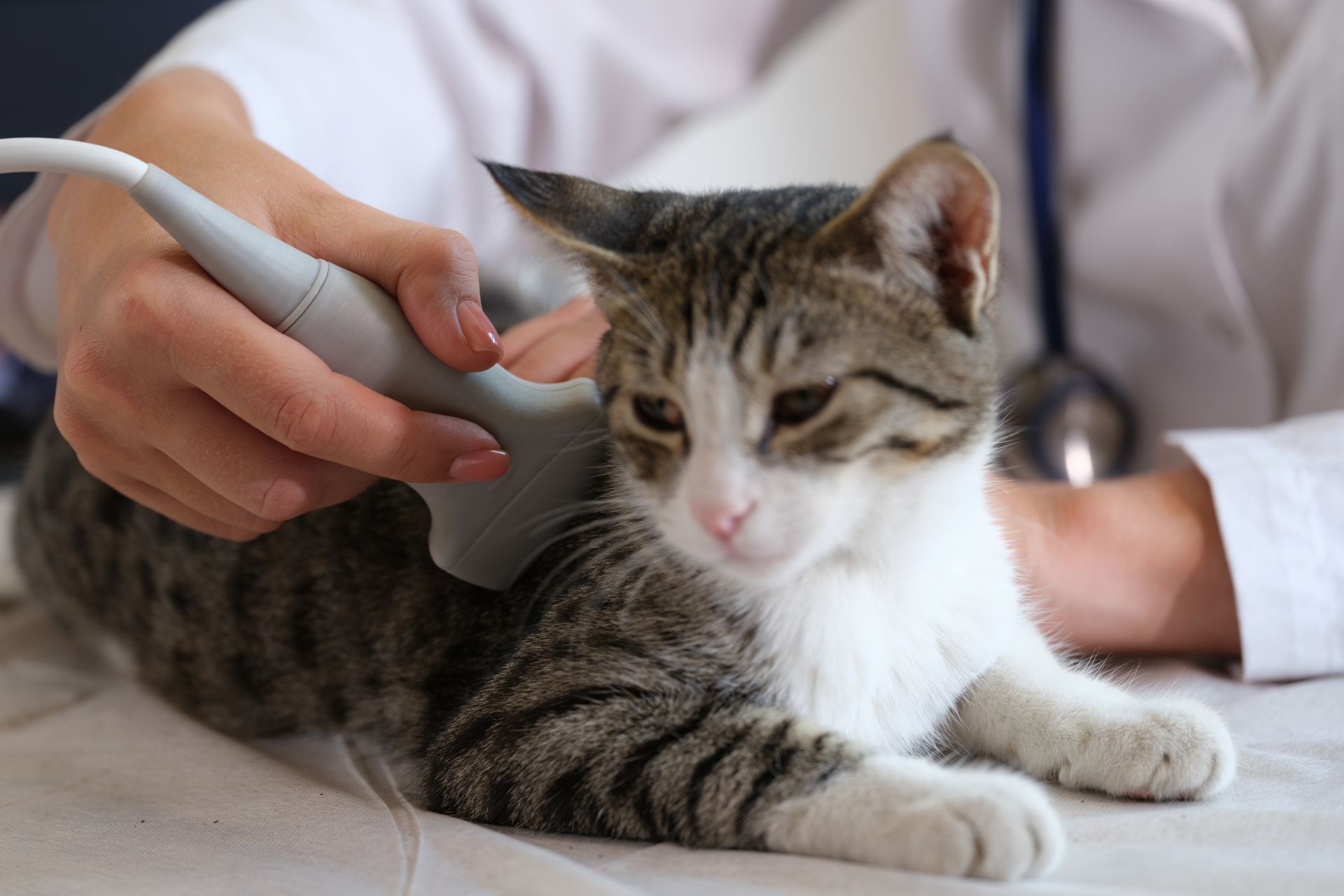
Cats are notoriously stoic in hiding pain, a survival adaptation that makes them expert concealers of illness and discomfort. The Feline Grimace Scale (FGS) is a validated veterinary tool developed by researchers at the University of Montreal that assesses pain in cats through the measurement of five specific facial action units. Studies have shown that FGS scores correlate reliably with acute pain in cats and respond predictably to analgesic treatment, making it a powerful and accessible pain monitoring tool.
Unlike behavioral pain assessments that require extended observation, the FGS can be applied from a single photograph or a brief observation, making it practical for veterinary visits, post-operative monitoring, and home assessment by trained owners.
Use the table below to compare The Five Facial Action Units of the FGS.
| Facial Action Unit | Score 0 (No Pain) | Score 1 (Moderate Pain) | Score 2 (Severe Pain) |
|---|---|---|---|
| Orbital tightening (eye area) | Eyes wide open or relaxed; no squinting | Partially closed eyes; mild squint | Strongly squinted or closed eyes; intense orbital tightening |
| Ear position | Ears upright and facing forward | Ears slightly lowered or rotated | Ears flattened against head; pinned back |
| Muzzle tension | Soft, relaxed muzzle; rounded chin | Mild tension; slight flattening of muzzle area | Marked tension; flattened, elongated muzzle; wrinkled area around nose |
| Whisker change | Whiskers relaxed and spread naturally | Slightly forward or clumped | Whiskers forward and clumped against face OR completely flattened backward |
| Head position | Head level with or above shoulders; forward-looking | Head slightly below shoulders; tilted | Head well below shoulders; tucked between forelimbs |
Each of the 5 action units is scored 0, 1, or 2. The scores are summed and divided by 10 to give a final score between 0 and 1. Alternatively the raw score out of 10 is used.
| Total Score (out of 10) | FGS Score (out of 1) | Pain Interpretation | Recommended Action |
|---|---|---|---|
| 0-2 | 0-0.2 | No pain or minimal pain | Continue monitoring; no analgesia needed |
| 3-4 | 0.3-0.4 | Mild pain | Monitor closely; consider analgesia; veterinary assessment recommended |
| 5-6 | 0.5-0.6 | Moderate pain | Analgesia indicated; veterinary assessment required |
| 7-10 | 0.7-1.0 | Severe pain | Urgent analgesia required; emergency veterinary care indicated |
Use the table below to compare Conditions Where FGS Is Most Useful.
| Condition | FGS Application |
|---|---|
| Post-surgical monitoring | Assess pain every 2-4 hours post-op; guide analgesic dosing |
| Dental disease | Before and after dental procedures to confirm pain relief achieved |
| Chronic osteoarthritis | Serial monitoring to assess treatment efficacy; baseline and follow-up |
| Urinary obstruction | FGS confirms pain severity in blocked cat during triage |
| Traumatic injury | Rapid pain triage at any access point including home emergency assessment |
The UNESP-Botucatu scale is a more comprehensive multi-domain feline pain assessment that includes behavioral observation, posture, and vocal components alongside facial expression. The FGS is faster and suitable for rapid triage and photo-based remote assessment. UNESP-Botucatu provides a more complete picture for post-operative or chronic pain management in clinical settings.
With the free FGS training guide and photo reference chart available at the FGS website (felinegrimacescale.com), owners can learn to use the scale with reasonable reliability for major pain differences. However, training significantly improves accuracy. Subtle FGS differences (1-2 points) are more reliably detected by trained assessors.
Not necessarily. Some cats naturally have a slightly squinted resting expression. What matters for pain assessment is a change from the individual cat's baseline, not the absolute score. Establish your cat's normal facial expression when you know they are healthy and comfortable, so you have a reference point for comparison during potential illness.
Note: Grimace scoring can help track visible comfort signs, but pain concerns should be discussed with a veterinarian.
Continue with Feline Stress Calculator, Fe-BARQ: Feline Behavioral Assessment & Research Questionnaire, Free 2 Minute Cat Personality Test for the next practical step.
Find out if your cat is stressed using behavioral and physical indicators. Get a stress score and actionable tips to help your cat feel safe and relaxed.
Start Assessment
Use the Fe-BARQ questionnaire to assess your cat's behavior across key dimensions. Understand aggression, fearfulness, and social traits with a scored profile.
Start Assessment
Find out your cat's personality type with our free 5-factor feline personality test. Understand their behavior and match enrichment to their unique traits.
Start Quiz